Mandato
I brought clause extraction and document analysis to the demo. He wanted to know which clients he had not replied to that week.
- Industry
- Legaltech
- Location
- Spain
- Role
- Co-founder
- Team
- 4 people
- Established
- 2026
- Website
- mandato.es
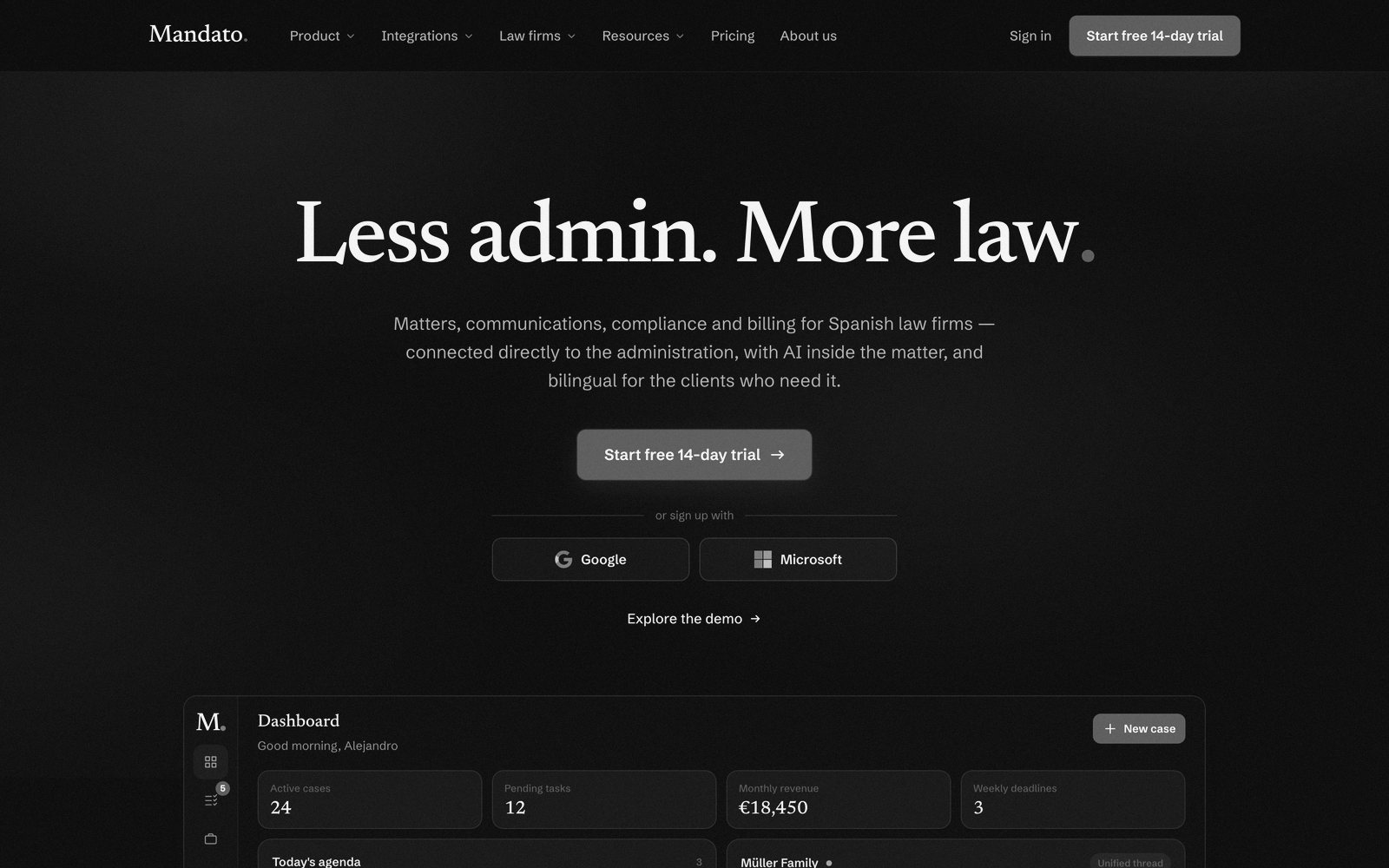
Mandato is a platform for Spanish law firms: the matters, the correspondence and the deadlines in one place, with the routing and the chasing increasingly handled by models rather than by somebody remembering. That is the description. The origin is a single meeting I have thought about more than any other.
I demoed an early build to a lawyer. I had brought document analysis, clause extraction, a summarisation feature I was rather pleased with. He let me talk for about four minutes and then asked whether the thing could tell him which clients he had not replied to that week.
Why it exists
Legal AI demos are built to impress people who do not practise law. Feed in a two-hundred-page agreement, watch a memo appear. It is genuinely impressive, and it is aimed squarely at the part of the job lawyers are already good at, spent seven years learning, and mostly enjoy.
The bottleneck in a small firm is never the analysis. It is everything wrapped around it — the enquiry that arrived on Friday and got buried under a completion, the document nobody remembered to order, the client waiting four days for a yes or no that would take ninety seconds to give if anyone had a reliable picture of what was outstanding.
The most valuable thing we have shipped reads incoming mail and works out which matter it belongs to. That is the whole feature. It is what firms mention when they renew.
Mandato exists because that unglamorous problem is the real one, and because it was ours before it was anybody else's. Frank & Partners is a cross-border practice, which means a single matter can involve a buyer in one country, a seller in another, two agents, a gestoría, a notary and a bank — half of them writing in different languages, none of them using a useful subject line. The correspondence fragments within a fortnight. That is not a technology problem waiting for a model. It was the problem long before anyone had a model to point at it.
How it is built
AI-native, but not AI-first in the demo sense. The reasoning fireworks are the easy part to build and the least valuable part to own. What is hard, and what the firms actually pay for, is being reliably right about dull things: which matter this belongs to, who owes whom an answer, what is late.
It is also built for Spanish practice specifically rather than translated into it — the documents, the deadlines and the institutions are not generic, and a platform that treats them as generic gets returned.
Where it is going
I have written up what two years of building software for lawyers actually taught me, including how much of what I assumed at the start turned out to be wrong. The short version is that the firms who adopt this are not buying intelligence. They are buying the end of the feeling that something has been missed. That is the thing to keep getting better at.